Why Basketball Club Teams San Diego Are Great for Skill Progression
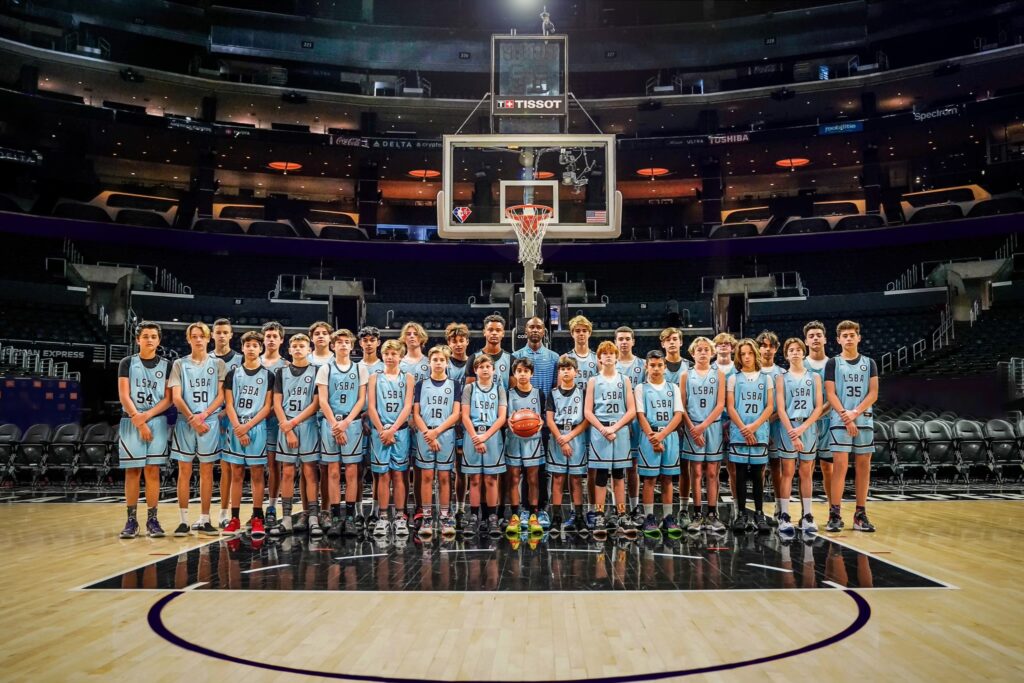
Basketball development rarely Basketball Club Teams San Diego happens in a straight line. A player looks sharp one month, then struggles with pace, confidence, or decision-making the next. That uneven path is normal, and it is exactly why the right training environment matters so much. For families and athletes trying to move beyond casual rec play, Basketball Club Teams San Diego offer a structure that supports real skill progression, not just more games on the calendar.
San Diego has a basketball culture that is both competitive and unusually varied. You will find players coming from school teams, parks and rec leagues, private training sessions, church leagues, and year-round club programs. That mix creates a strong proving ground. It also creates a challenge. More opportunities do not automatically mean better development. The quality of the environment, the coaching standards, the practice design, and the level of competition all shape whether a player actually improves.
Club basketball, when it is run well, gives players repeated exposure to the exact situations that force growth. That matters more than many parents realize. Skill progression is not just about a smoother jump shot or a tighter handle. It is also about learning how to process defenders, read help-side coverage, communicate on the weak side, absorb physicality without rushing, and stay composed after a turnover. Those habits are built through repetition against quality opposition, with coaching that is specific and timely.
What club basketball changes for a developing player
The biggest difference between club basketball and more casual team settings is not simply volume. It is intention.
A solid club team usually has a clearer philosophy around player development. Practices tend to be more structured. Expectations are more consistent. Competition is stronger from top to bottom. A player who can get away with loose footwork or a lazy closeout in a local recreational league usually gets exposed quickly in club play. That exposure can be uncomfortable, but it is one of the fastest ways to improve.
I have seen this with young guards especially. In a lower-pressure environment, a quick first step might be enough to create an open lane every possession. On a club court, that same player meets defenders who can slide, recover, and contest. Suddenly, raw speed is not enough. Now the player has to change pace, use a hesitation, protect the ball, read a second defender, and finish through contact. That is genuine progression. The game demands more, so the player expands.
For post players, the shift can be just as dramatic. A taller athlete might dominate smaller local competition with size alone, but club basketball often brings defenders who are stronger, better positioned, and more disciplined. That forces the player to learn leverage, timing, counters, and passing out of pressure. Instead of just catching and turning, they have to think the game.
San Diego is particularly good for this kind of growth because the talent pool is broad enough to challenge players at many levels. Elite prospects can find high-level competition, but so can late bloomers who simply need a stronger developmental setting than school ball alone can offer.
The San Diego advantage
Location shapes development more than people admit. Basketball Club Teams San Diego benefit from a region where athletes can play year-round, travel reasonably well for tournaments, and compete against a steady stream of talented opponents. The climate helps, of course. Training does not shut down for long stretches. Gyms stay active. Outdoor courts are usable most of the year. Players stay in rhythm.
But weather is the small part of it. The larger advantage is basketball density. San Diego sits in a strong corridor for youth hoops. Local competition is meaningful, and tournament access is practical. Teams can test themselves regularly without every event becoming a major logistical burden. That means more opportunities to apply what was practiced.
Application is where progress becomes visible. A player can look polished in drills and still struggle when the game speeds up. Club settings create repeated game film, repeated defensive schemes, repeated pressure moments. Over time, patterns emerge. Coaches can identify whether a player is missing reads, drifting on defense, struggling with off-ball positioning, or simply lacking stamina late in games. Once those patterns are visible, training becomes more targeted.
That cycle, practice, competition, feedback, adjustment, is the engine behind skill progression.
Why stronger competition accelerates growth
There is a reason so many players plateau in softer environments. If the game never punishes bad habits, those habits survive.
Club basketball tends to expose weak points quickly. That can look harsh from the outside, especially for younger players adjusting to tougher defenders and more physical play. Yet the experience is useful. A player who gets trapped in the corner, loses the ball against ball pressure, or gets beat backdoor three times in one half is receiving feedback the game delivers very honestly.
Good coaches use those moments well. They do not just say, "Play harder" or "Be more aggressive." They teach the missing detail. Maybe the guard needs a better retreat dribble and stronger passing angles. Maybe the wing is ball-watching instead of seeing man and ball. Maybe the big is opening up too early and giving away rebounding position. Specific problems lead to specific corrections.
One of the clearest signs that a club team is helping a player improve is when mistakes become more sophisticated. That sounds odd, but it is true. Early on, a player might make basic errors, poor spacing, wild drives, casual defensive stance. As development happens, the mistakes change. Now the player is making the right read a beat late, or missing a skip pass that they at least recognized. That is progress. The game is becoming more complex because the player's understanding is expanding.
San Diego club teams often see a wide spectrum of opponents, which helps here. Some teams play fast and spread the floor. Others are physical, disciplined, and half-court oriented. Some pressure full court. Others pack the paint and dare teams to shoot. Facing those different styles teaches adaptability, and adaptability is a huge part of skill progression.
Practice quality matters more than tournament volume
A common misunderstanding in youth basketball is that more games automatically mean more development. They do not. Games reveal ability. Practices build it.
The best club programs use practices to sharpen transferable skills. That means decision-making in live situations, not endless unguarded drills. It means footwork with context, shooting with pressure, closeouts that lead into real defensive possessions, and small-sided games that force players to process quickly. A two-hour practice filled with competitive reps can do more for a player than an entire weekend of poorly structured tournament games.
This is one area where families need to look past branding. Not every club team develops players equally well. Some lean heavily on exposure, travel, and packed schedules. Others put far more care into teaching. For most youth athletes, especially before the later high school years, the teaching side matters more.
A well-run club practice usually has a rhythm. There is skill work, but it links to game situations. There is teaching, but it does not stop the whole gym every thirty seconds. There is competition, but not chaos. Players leave with a clear sense of what they are improving and why.
I have watched players transform over a single season in that kind of setting. One was a forward who relied almost entirely on effort and athleticism. Good motor, good rebounder, but limited feel. In a strong club environment, he was taught how to screen with purpose, short roll into space, make one-read passes, and defend without reaching. By the end of the season, he was still the same athlete physically, but he had become much more useful because his decisions improved. That is what progression looks like in real life. It is not always flashy.
Repetition under pressure builds reliable skill
There is a big difference between having a skill and owning it.
A player may make ten catch-and-shoot threes in an empty gym. That tells you something. It does not tell you whether they can get into the shot after sprinting from the corner, reading the defender's stunt, catching slightly off balance, and firing before the closeout arrives. Club basketball offers the kind of repeated pressure that helps turn isolated skill into dependable game skill.
This is especially important for ball handling and passing. Many younger players San Diego club basketball teams can dribble well in space. Fewer can handle pressure from strong defenders who know how to angle their body, shade to a help defender, and attack weak hands. The same goes for passing. Basic chest passes in drills are not the issue. The real challenge is making the right pass, on time, from a compromised position, with enough zip, while reading rotating defenders.
Basketball Club Teams San Diego put players into those situations often enough that the nervous system starts to adjust. The game slows down, not because the competition gets easier, but because the player learns to process more quickly.
That processing speed is one of the least visible and most valuable parts of development. Parents often notice the result before they understand the cause. Their child "looks calmer" or "seems more confident." Usually that calmness comes from pattern recognition. The player has seen this trap before. They have dealt with this hedge. They recognize the weak-side tag. Repetition builds comfort, and comfort improves execution.
Development goes beyond individual skill
Pure skill work matters, but team concepts often determine whether a player can actually stay on the floor against better competition.
Club basketball tends to accelerate understanding of spacing, timing, transition responsibilities, screen usage, and defensive rotations. Those elements are difficult to teach in fragmented environments where rosters change constantly or practices are infrequent. On a club team, players have enough continuity to build chemistry and understand roles.
That does not mean they should be boxed in too early. One of the best things a strong club coach can do is give players structure without limiting growth. A taller wing might spend time as a secondary ball handler. A point guard might learn to play off the ball and relocate for shots. A forward might defend smaller players on switches instead of staying near the paint all game. Those experiences matter later.
Skill progression is often about expanding range, not narrowing it. Players become more valuable when they can solve more than one kind of problem on the floor.
The confidence factor is real, but it has to be earned
Confidence gets talked about loosely in youth sports, as if it can be handed over through encouragement alone. Real confidence comes from competence. Players trust themselves when they have done the work, tested it in games, adjusted after failure, and seen improvement.
Club basketball creates that loop. A player gets challenged, struggles, returns to practice with purpose, and comes back better. That sequence builds durable confidence because it is based on evidence.
There is also a social component. Being surrounded by serious teammates raises standards. Players start to understand what preparation looks like. They see peers arriving early to shoot, asking questions, studying film, or staying engaged from the bench. Habits spread in both directions. In weaker environments, casual habits can take over. In strong club settings, disciplined habits become normal.
For younger athletes, that cultural piece can be huge. Sometimes the biggest leap is not technical. It is learning how to approach the sport with consistency.
What families should look for in a club program
Not every team that calls itself developmental actually is. The label is easy to use. The substance is harder to fake if you know what to watch.
Here are a few signs that usually matter more than flashy marketing:
- Practices are frequent, organized, and teaching-focused.
- Coaches give specific feedback rather than constant generic commands.
- Players have defined roles, but still get chances to grow outside them.
- Competition level is challenging without being wildly mismatched every weekend.
- The program communicates clearly about goals, playing time philosophy, and expectations.
That last point saves a lot of frustration. Some club teams prioritize winning now. Others focus more heavily on long-term development. Neither approach is automatically wrong, but families need to know which environment they are entering. A player who needs reps to build confidence may not thrive on a team where the rotation is tight and results dominate every decision. A more advanced player may need the opposite, a demanding environment where minutes must be earned.
Fit matters. The best Basketball Club Teams San Diego for one athlete may not be the best for another.
The trade-offs are worth considering honestly
Club basketball is not perfect. It costs money. It requires time. Travel weekends can pile up. School balance becomes a real issue, especially as players get older. Some athletes burn out when they play too many months without a break. Others get stuck on teams where winning overshadows teaching.
Those are not small concerns, and they should not be brushed aside.
At the same time, the right club experience can compress years of learning into a much shorter window. A player who practices with intent, competes against strong opponents, and receives quality coaching may improve more in one committed season than in several years of lower-level play. The gains are not just in shooting or ball handling. They show up in poise, awareness, communication, and discipline.
Families should also remember that progression is not always immediate. Sometimes players look worse before they look better, especially when they move into a tougher environment. Turnovers might increase for a while. Shooting percentages may dip. Confidence may wobble. If the setting is healthy and the coaching is good, those short-term struggles often signal that the player is being stretched, not failing.
Why San Diego players often benefit from the club pathway
San Diego offers a useful combination for player growth: enough talent to make competition meaningful, enough program variety to create options, and enough basketball activity year-round to keep development moving. For athletes who want to improve beyond the school season, club teams can fill the gaps that school programs often cannot.
School seasons are short. Practice time is limited. Team priorities can skew toward immediate results. Club basketball gives players more touches, more film, more reps, and more chances to develop through mistakes. It also exposes them to coaches with different strengths. One may sharpen guard skills. Another may emphasize defensive discipline. Another may teach how to play within a college-style offensive system. That range can be valuable when a player is still forming their game.
I have seen players in San Diego use club basketball in different ways. Some aimed for varsity readiness after being buried on a middle school depth chart. Some wanted stronger off-season work so they would not lose momentum. Others needed to play against faster, more physical athletes to understand where they really stood. In each case, the common thread was not prestige. It was environment.
The best club team is the one that creates daily pressure to improve and enough support to turn that pressure into progress.
The long view of development
Skill progression in basketball is rarely about one breakthrough moment. It is usually the result of hundreds of smaller corrections. Better angles. Better footwork. Better decisions. Better habits when tired. Better communication when frustrated. Club basketball is effective because it creates a setting where those corrections happen over and over again.
That is why Basketball Club Teams San Diego can be such a strong option for motivated players. The city provides competition. Good programs provide structure. Strong coaching provides clarity. The athlete, if willing to be coached and patient through the hard stretches, gains something much more useful than highlight moments. They gain a game that keeps expanding.
And that, more than a tournament medal or a flashy weekend performance, is what real development looks like.
Lamont Smith Basketball Academy
888 Clairemont Mesa Blvd Suite T-2, San Diego, CA 92123
(619) 639-8778
FAQ About Basketball Club Teams San Diego
How can a player join an LSBA club team?
Players are evaluated during practices so the coaching staff can recommend an appropriate team and development level. Families should contact the academy to confirm current openings and evaluation details.
Are club teams available for newer basketball players?
Yes. LSBA describes multiple levels, including a developmental option for newer players as well as more competitive teams for athletes with prior club experience.
What do LSBA club team practices emphasize?
Practices emphasize basketball fundamentals, team defense, structure, communication, and player development. The specific focus may vary according to the team and experience level.
Do all LSBA teams travel?
Travel expectations vary by level. Some teams focus on local competition, while advanced teams may participate in tournaments elsewhere in Southern California or beyond. Families should confirm the current schedule before enrolling.